Why does shiny metal still look like the future?
In shortThe age of an object, the age of an idea, and the sense of time it evokes can be separated from each other.
A strange thing happens when looking at an old interior photograph: While the curtain’s pattern, the phone’s shape, and the television’s casing immediately reveal the era, a shiny metal coffee table can still look like it belongs to tomorrow. The object is older than us; the life it promises seems yet unlived.
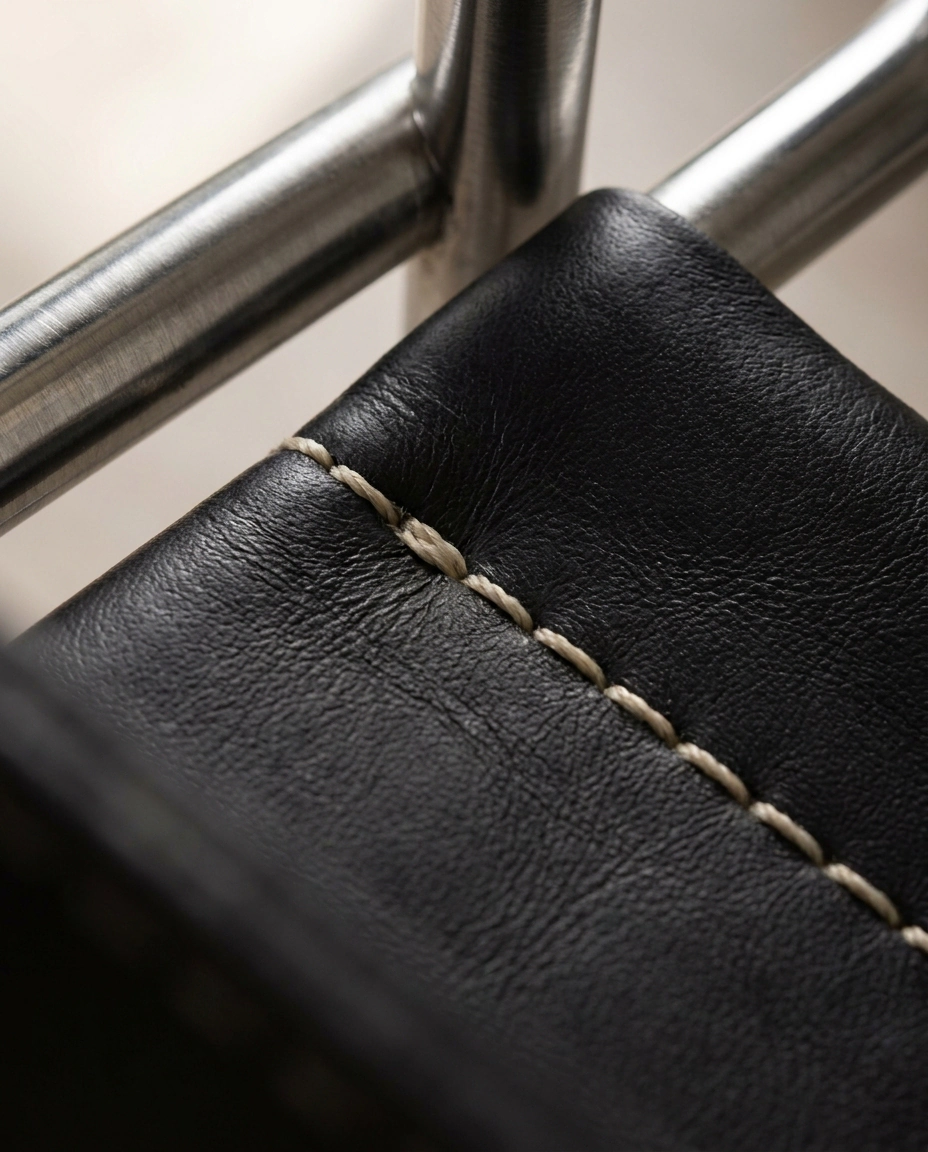
Whether a piece of furniture looks futuristic and whether it is new in design history are separate questions. A slender steel tube can evoke nearly a hundred years of visual memory in an object produced today. This temporal confusion is partly what makes shiny metal interesting: forms used to describe the future in one era can still evoke the same feeling even after their own time has passed.
To understand the story of this gleam, it helps to trace a path from modernist furniture to the space age. Along the way, it’s important not to confuse materials. Chrome plating, stainless steel, and steel tubing describe different things.
The Line Emerging from the Chair
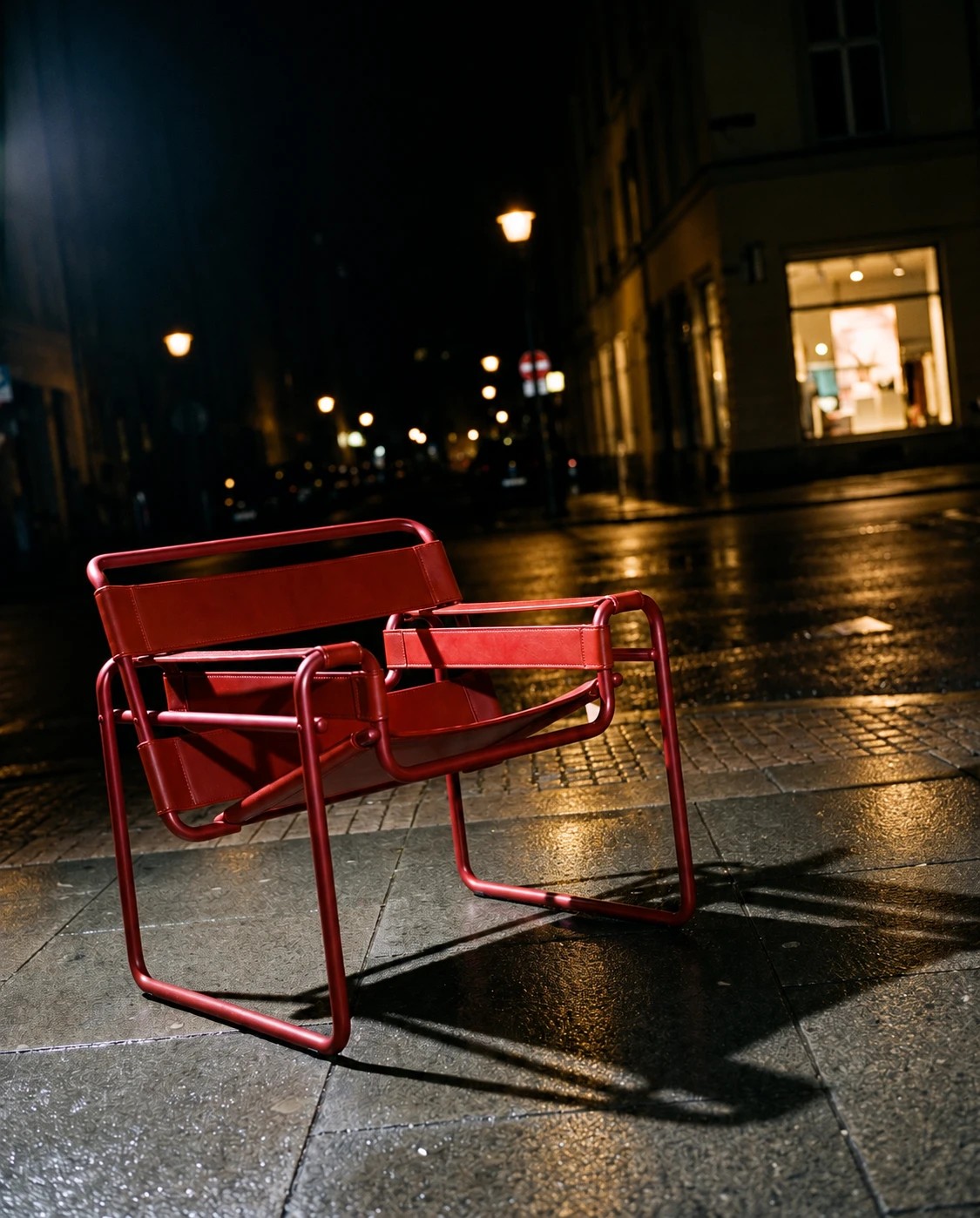
Marcel Breuer designed the first version of his chair, known as B3, in 1925. The 1927-1928 example in MoMA’s collection combines chrome-plated steel tubes with canvas. According to the museum, Breuer was inspired by the strong and lightweight steel tube handlebars of his bicycle. The familiar mass of a plump club chair transforms here into a skeleton drawn in the air. We simultaneously see the system supporting it, the space between its parts, and the continuation of the floor. MoMA: B3 / Wassily
Eileen Gray’s height-adjustable table, designed in 1927, also creates a similar sense of lightness. The 1976 production example at MoMA features chrome-plated steel tubing, steel sheet, and glass. Looking at the circular tabletop and the slender support, we notice not only the volume the furniture occupies but also the void it leaves around it. The shiny surface sometimes defines the object’s boundary and sometimes makes it disappear within the room’s reflection. MoMA: Adjustable Table
Looking at these two objects from today, we see not only the gleam but also a way of thinking: How much can the familiar appearance of a piece of furniture change? How much do we truly need the accustomed masses for ordinary tasks like sitting or setting down a cup? These questions remain vivid, even if the forms themselves have become familiar.
The Story Shifts Direction in the Space Age
In the 1950s and 1960s, the space race brought new images to the question of how we would live in the future. The Victoria and Albert Museum interprets the furniture of the period through this curiosity: capsule-like seating areas, molded plastics, and unusual geometries. Eero Aarnio’s 1963 Ball Chair encloses the sitter within a spherical shell. The chair creates the feeling of a small room within the room. V&A: Space-Age Chairs
Here, the story of materials reaches an important crossroads. To line up modernist steel tube furniture and space-age design along a single shiny metal line would overlook the change between them. The Ball Chair’s capsule feeling is created by its synthetic shell, color, and geometry. The evocation of the future can arise from different materials and different dreams of living in different eras.
When we place the three objects side by side, this distinction becomes as visible as their dates:
Marcel Breuer, B3 / Wassily
- Design date
- First version 1925
- Example seen in source
- MoMA example 1927-1928; chrome-plated steel tube and canvas
Eileen Gray, Adjustable Table
- Design date
- 1927
- Example seen in source
- MoMA example produced 1976; chrome-plated steel tube, steel sheet, and glass
Eero Aarnio, Ball Chair
- Design date
- 1963
- Example seen in source
- V&A example produced by Asko in 1966
Separating the design date from the production date is important here. The date on an example we see in a museum may not indicate the year the design first emerged. The fact that Gray’s table was produced in 1976 does not mean the idea was born that year. Conversely, the fact that a piece of furniture we buy today has been newly produced does not prove that its formal language is entirely new. One must consider the age of an object, the age of an idea, and the sense of time it evokes separately.
This chronology shows that there is no contradiction in an old object resembling the future. The future, too, eventually transforms into a period style. A surface we thought belonged to tomorrow as children becomes a familiar image from an old magazine years later. Yet, it continues to arouse curiosity.
Before Calling Every Gleam Chrome
In everyday conversation, we easily call silver-colored and shiny furniture “chrome.” However, how a surface appears in a photograph does not alone explain what it is made of. Separating these three terms allows for a more accurate reading of both design history and contemporary products:
Chrome-plated steel
- What does it describe?
- Chrome plating on steel
- What does it not explain alone?
- Whether the underlying steel is stainless
Stainless steel
- What does it describe?
- An iron alloy containing at least 10.5% chromium
- What does it not explain alone?
- Whether the surface is matte, brushed, or mirror-polished
Steel tubing
- What does it describe?
- The tubular shape of a steel part
- What does it not explain alone?
- Its alloy and surface treatment
Chrome plating is a surface treatment; the name stainless steel defines the alloy. Stainless steel can also be given different surface finishes. Therefore, “shiny” is not considered sufficient information for material identification. Specifying the material and surface treatment separately on a product page is the most direct way to resolve this confusion. Silchrome: Chrome plating, BSSA: Composition of stainless steel, BSSA: Surface finishes
Returning home, alongside this technical distinction, there is a more everyday experience. The morning light from the window, the small reflection of the evening lamp, the burgundy fabric or green cover next to it, all contribute to the metal’s appearance. Let’s consider a wool rug and a shiny frame together: one softens the light, while the other reflects it back in small lines. Different materials can respond differently to the same light in a room.
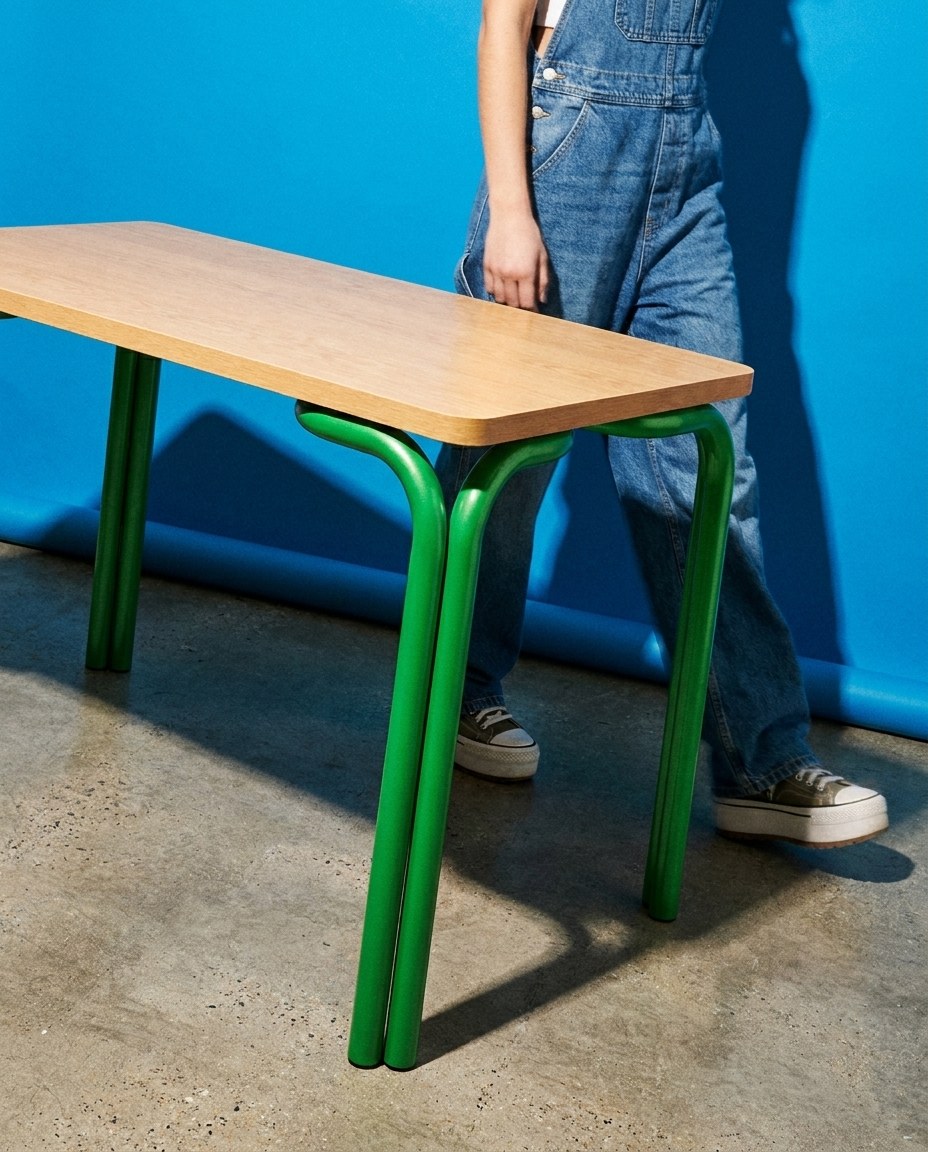
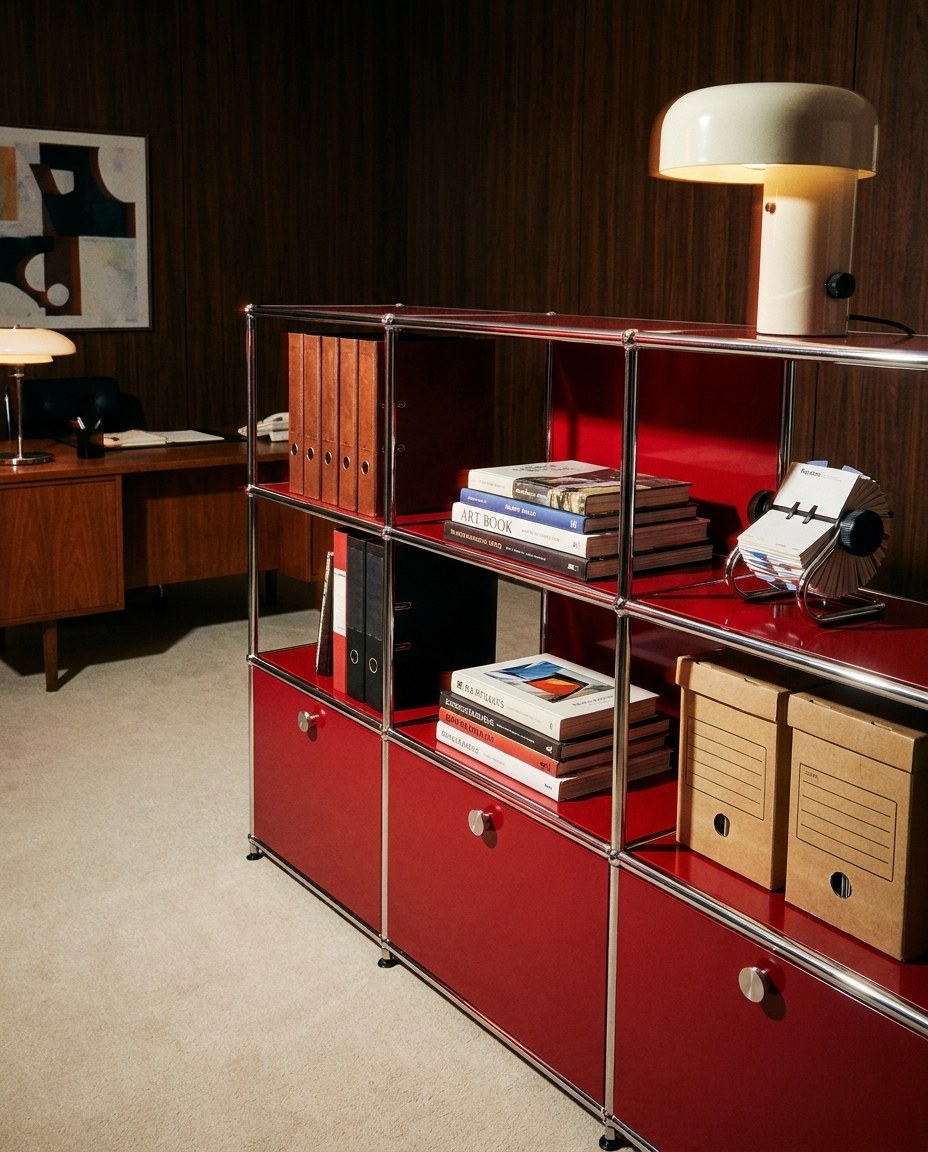
Vermut’s stainless steel tube frame and colored surfaces also serve as an example for considering this relationship in today’s home. Books, glasses, and small everyday items fit between the slender lines. When looking at Vermut, we can observe how a reflection changes with the cover color, and how light gathers at the edge of a shelf.
Perhaps this is why shiny metal still looks like the future: while our eyes recall the design dreams of the past, the surface reflects the room in front of it anew each day.
Previous article from NotesA chair’s right to age