
Who does the living room face when the TV is removed?
In shortThe capacity of a living room alone doesn’t explain which relationships can be comfortably formed within it.
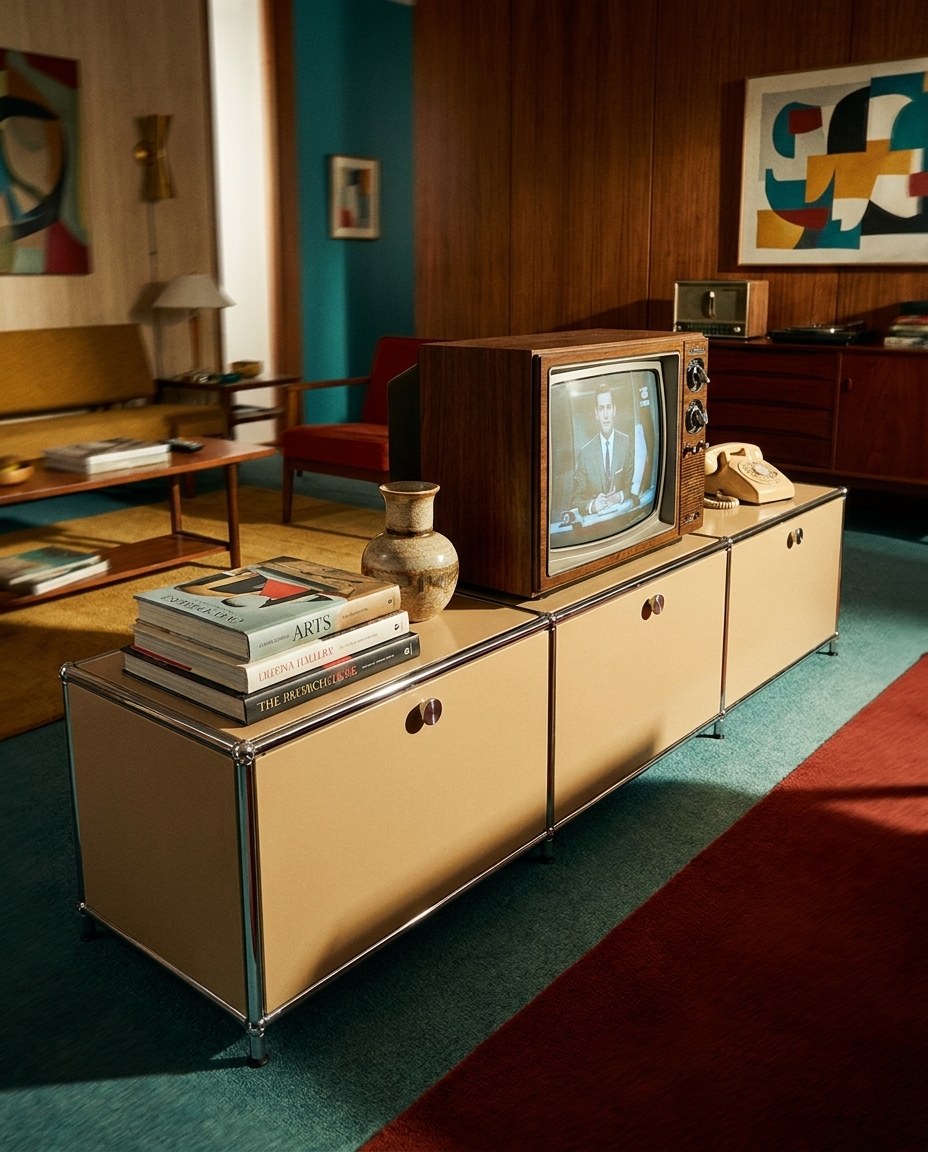
Seeing which way the sofas face in a living room is a good starting point for predicting how the room will be used. If the sofa is against a wall and the armchairs are positioned to face the screen opposite, the main activity for the evening is clear. The remote’s spot, the corner for stretching out feet, the surface for placing a teacup are determined over time. For a home that loves watching movies, this arrangement is perfectly sensible.
What’s truly interesting is what happens when the television is turned off. In the same seats, this time we try to tell each other something. One person turns their head, the other slides to the edge of the sofa. When leaning back, faces move out of view. The screen is off, but the seating arrangement is still looking for its audience.
The claim here is small and testable: Just as much as the distance between two seats, the orientation of people relative to each other affects the conditions of conversation. The capacity of a living room alone doesn’t explain which relationships can be comfortably formed within it.
Same distance, different conversation
Environmental psychologist Robert Sommer, in his 1959 study, investigated how people positioned themselves around a table. Observations in hospital staff dining rooms found that conversations occurred more frequently between adjacent seats, with positions sharing a table corner particularly prominent. Subsequently, in experiments where he asked people to converse and observed their chosen spots, he also saw a preference for corner positions. These were observations and experiments conducted in specific environments; they didn’t offer a universal layout template for every home. However, they highlighted a fruitful question from a design perspective: How do we sit relative to the person we want to communicate with? Sommer, Studies in Personal Space, 1959.
A more recent study addressed this question in a controlled manner. Piro and colleagues, considering in-vehicle layout design, kept the distance between the centers of seats constant at one meter and compared four different angles. The 36 university students in the study rated conversation comfort and quality highest in the 90-degree arrangement. Ratings were lower in the side-by-side arrangement facing the same direction. This result doesn’t establish a 90-degree rule for homes; it shows that orientation can make a difference even when the distance remains unchanged. Piro et al., Applied Ergonomics, 2019.
A careful distinction is needed when bringing these two studies into the living room. Turning a chair can make it easier to start a conversation. It doesn’t guarantee that people will want to talk, listen to each other, or feel close. Facing the same direction can also be preferred for watching a movie together, listening to music, or looking out the window.
Same room, three different evenings
Now, let’s imagine a room with a door and a window. Inside, there’s a sofa, two armchairs, a coffee table, and a floor lamp. The three layouts below are conceptual design proposals comparing how the same items can support different uses; they haven’t been implemented or measured yet. Since we don’t know the room’s dimensions or the furniture’s sizes, we’re not drawing conclusions about passage width or acoustic performance.
Evening one: Conversation. Let’s keep the sofa fixed and turn the two armchairs inwards. The coffee table can remain in the center; let’s leave an opening on the path to the door. What’s sought here is less a perfect circle and more that occupants can comfortably see each other. Can a person follow the conversation even when leaning back? Do they constantly need to lean forward to respond?
The cost of this arrangement might be that not everyone can see the same screen well. Also, bringing all the seats closer together could narrow the passage between the door and the window. What makes the inward-facing arrangement good is its ability to solve these two needs together. The person bringing coffee not having to pass through the middle of the group is also part of the conversation’s comfort.
Evening two: Music. This time, let’s turn the two armchairs towards a common listening direction; a slight angle might remain between them. Let’s consider the sofa as a place where one can join from further back in the room. The coffee table should move closer to an armchair, and the lamp should provide enough light to read an album cover. The goal is to create a togetherness that doesn’t require constantly looking at each other’s faces while being in the same room.
This arrangement might require a bit of movement from someone wanting to rejoin a conversation. In return, it’s expected to facilitate shared silence. The placement of speakers and the room’s acoustics should be considered separately; changing chair orientations alone doesn’t promise better sound. What we’re comparing here is the relationship of listeners with each other and with the rest of the room.
Evening three: Solitude. Let’s turn one of the armchairs to create a corner by the window. The coffee table and lamp should accompany it. The other armchair should maintain its relationship with the sofa; thus, the room can offer two separate uses that don’t expect everyone to participate in the same activity. It remains possible for one person to read while the other sits on the sofa.
This arrangement also doesn’t provide unlimited privacy. In an open living room, sounds are shared, and those passing by the door are visible. The chair’s orientation can offer a person a bit of retreat; it cannot entirely take on the role of a separate room. Especially for people living at different rhythms in the same home, designing with this limitation in mind is more practical.
Conversation
- Room’s focus
- People’s faces
- Seating relationship
- Inward-facing, open group
- Expected to facilitate
- Joining a conversation
- Practical cost
- Shared screen view and passage area may decrease
Music
- Room’s focus
- A shared listening direction
- Seating relationship
- Slightly angled, seating facing similar directions
- Expected to facilitate
- Listening and being silent together
- Practical cost
- Returning to conversation may require movement
Solitude
- Room’s focus
- A corner by the window
- Seating relationship
- Armchair partially separated from the main group
- Expected to facilitate
- Engaging in a separate activity in the same room
- Practical cost
- Sound and privacy issues are not entirely resolved
Read your living room with three questions
To use this comparison in your own home, you don’t need to buy new furniture first. You can start with your existing seating and consider three questions:
- Can you keep your back supported while talking to someone, or do you have to turn your body every time?
- When one person stands up, do others also need to make space?
- Is there a place where you can pause a shared activity without leaving the room?
These do not form a standard scale derived from research; they are questions that can be used to evaluate the proposed layouts. Answers vary according to your home, body, and habits. The need for passage for someone with mobility difficulties or a child’s play area might be more decisive than whether the chairs face each other.
We can bring the television back into the room. Now the question is broader than whether all the chairs face it: Can this room also make space for another evening when the movie is over?