






Beige: A Matter of Taste or a Safe Decision?

In shortWhen choosing the color of a sofa, we are also negotiating with a life yet unlived.
When choosing the color of a sofa, we are negotiating with our future selves. Our present self loves terracotta. But we have no idea about our self five years from now. What if we get bored? What if we move? What if we have to change the rest of the room because we like that sofa?
A real-world example of this hesitation appears in a sofa selection discussion on Reddit. Someone moving into a new home likes an orange sofa but is hesitant about regretting such a large purchase a few years later. They are torn between cream and orange. The question here is much broader than a color swatch: What item should one buy for a life yet unlived?
Beige is a strong candidate in this negotiation. Visually, it can recede, blend with different items, and calm a decision one doesn’t want to rethink every morning. However, it’s useful to distinguish which part of the trust we place in it comes from our own taste and which part comes from uncertainty.
Does choosing a color require predicting the future?
In furniture selection, we can talk about two distinct possibilities. The first is a color we love today eventually falling out of favor. The second is living with a color we don’t particularly like for a long time. During shopping, the cost of the first is easier to imagine: The expensive sofa is there, and we envision getting tired of it one day. The second possibility is quieter. It’s hard to calculate the total cost of a room that we like a little less each day.
Decision research offers a useful thinking tool for this scenario. William Samuelson and Richard Zeckhauser’s 1988 study shows that presenting one of the options as the status quo can influence preferences. The research examines health plan and retirement program choices alongside decision experiments. This tendency, called status quo bias, explains that the familiar option can sometimes gain extra weight.
This study doesn’t compare sofa colors. The question we derive from this is: If we’ve had light neutral tones in our home for years, are we truly looking at a new beige sofa and a colorful sofa from an equal distance? We might consider one a natural starting point and the other a decision that needs justification.
The cultural advantage of appearing understated
The words we use to describe a piece of furniture are also part of the selection. Consider a conversation where we describe beige as “timeless” and orange as “bold.” The first word attributes a long lifespan to the choice. The second implies that the person choosing is taking a risk. In such language, choosing a colorful sofa can feel like adopting a certain character.
Artist and writer David Batchelor discusses habits of color exclusion in Western culture in his 2000 book Chromophobia. He criticizes color for sometimes being considered superficial and secondary, and at other times inappropriate or threatening. This is an interpretation of art and culture; it’s not a diagnosis for homeowners. Nevertheless, the section shared from Batchelor’s own text is a fruitful starting point for considering why good taste is sometimes equated with reducing color.
Using color doesn’t automatically grant originality. Nor does loving neutral tones indicate a lack of personality. What’s truly interesting is how the justifications we seek for these two preferences differ. If we ask one to defend their taste but don’t impose that burden on the other, then habit might be as much a part of the decision as aesthetics.
Color risk is not a single thing
When we unpack the question ‘What if I get bored?’, the decision becomes more concrete. The distinction below is a framework we suggest for pre-purchase consideration. It should not be read as a color psychology test or a model predicting regret.
Does the color take up too much space in the room?
- What can be controlled
- Evaluating the visible surface of the piece and its position in the room together
- What remains open
- A small color swatch doesn’t fully show the effect of the entire sofa
Will it look different at home?
- What can be controlled
- Examining a real material sample in your own room under daylight and evening light
- What remains open
- Photos and screens do not fully replace a physical sample
Will I need to change other items too?
- What can be controlled
- Considering the new piece alongside existing flooring, curtains, and rugs
- What remains open
- The assumption that every piece must be tied to the same color should also be questioned
Can I change the decision later?
- What can be controlled
- Learning from the manufacturer whether upholstery, cover, or surface changes are possible
- What remains open
- The feasibility and cost of these processes vary by product
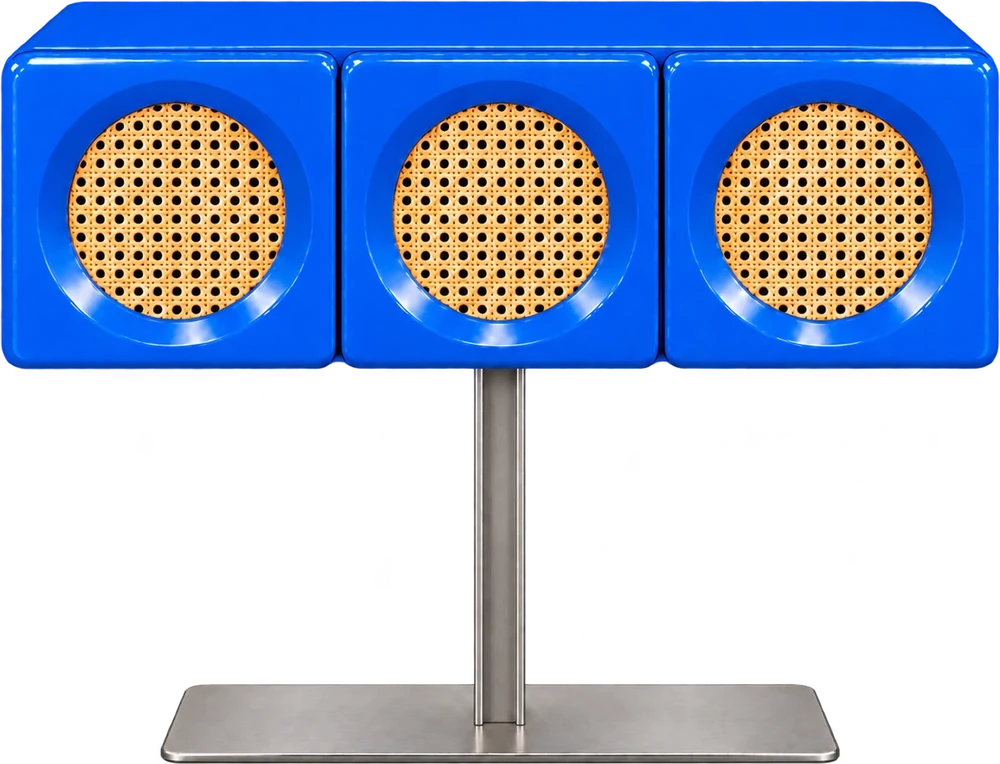
Here, the area covered by color is particularly important. In Rex, the colorful metal frame is seen with oak-veneered covers. The amount of color added to the room might not be the same as a single-color cabinet with the same external dimensions. Meanwhile, Suzan’s small body carries color to a more limited area. A decision about a color can be made in conjunction with where and how much of it is visible.
Therefore, when evaluating a colorful piece of furniture, we don’t have to bring all the colors we love into the home. Seeing it with existing items, focusing on a single piece, and examining the decision under several different lights can reduce some of the uncertainty. We accept the remaining part, as with any long-term choice.
The choice might still be beige in the end. However, that beige carries a different decision if it was chosen because we eliminated all other options from the start; and another if it was chosen because we loved its texture, light, and presence in the room. Being able to make this distinction is one of the things that makes a room personal.
Previous article from NotesWho does the living room face when you remove the TV?
